


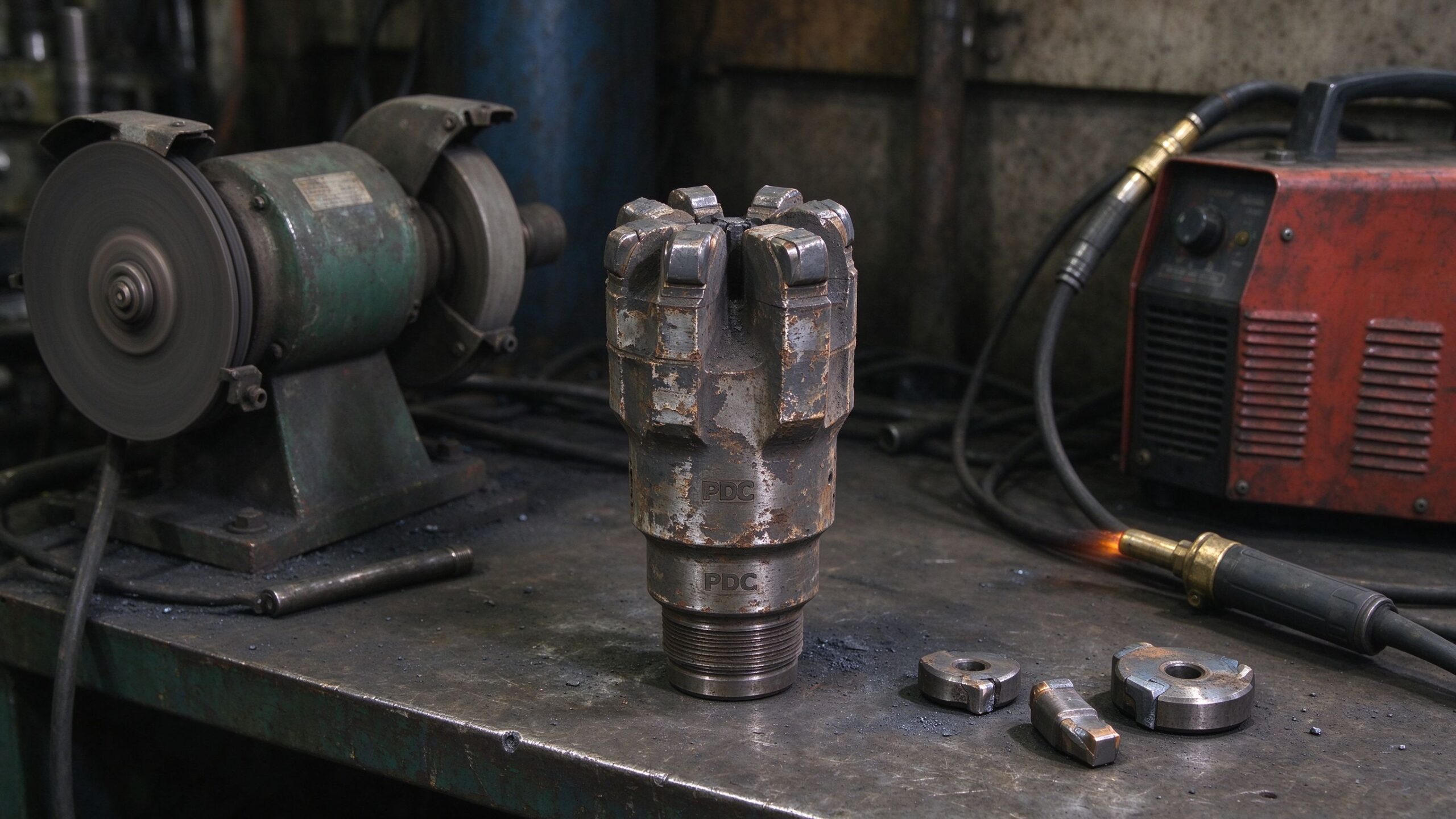
When a PDC bit comes off the hole dull, the instinct is to order a new one — but sometimes PDC bit reconditioning is the smarter money move. This cost-benefit guide explains what reconditioning actually does, what it costs, and when you should recycle instead of repair.
What PDC Bit Reconditioning Includes
Reconditioning means inspecting the used PDC bit, recutting or brazing replacement cutters, repairing damaged blades, and restoring gauge. A properly reconditioned matrix body PDC bit can deliver a second, sometimes third, bit run at a fraction of the new-bit price.
When Reconditioning Pays Off
- Normal wear only — cutters worn but body intact; recutting restores performance.
- Repeat programs — running the same bit type repeatedly makes reconditioning predictable.
- High new-bit cost — large PDC bits have long payback on repair.
When to Recycle Instead
Heavy erosion, washout, broken blades, or a body that is structurally damaged means reconditioning is uneconomical. At that point the bit still has value for its tungsten carbide and PDC cutters — send it through our PDC Drill Bit Recycling Program rather than paying for an unrepairable repair.
Rough Cost Logic
Reconditioning typically costs a fraction of a new bit, so if it restores even one more comparable run it usually wins. If you also generate worn tricone cones on the same site, you can combine them with our tricone recycling service to recover value from the whole fleet.
Not Sure Whether to Repair or Recycle?
Send photos of your used PDC bit. We will tell you honestly whether reconditioning is worth it or whether recycling the carbide gives you more value.
Get a Repair-or-Recycle Assessment